
Maybe you have been quietly googling ‘move to Europe’ at 11 pm. Maybe you watched someone else do it and thought: Could I? Maybe you just know something needs to change, but the idea of picking a country feels like choosing a major without having gone to college yet.
You are not behind. You are exactly where most people start.
The best European countries for Americans to move to are not ranked by some objective score. They are ranked by your life. Your pace, your budget, your personality, your goals. So before we get into specifics, let’s figure out what you’re actually looking for.
This guide is for the dreamers. No prior knowledge required.
First, Think About Lifestyle Before Location
Before you fall down a rabbit hole of ‘cheapest countries in Europe’ listicles, spend five minutes thinking about how you want your daily life to feel. This one step will save you weeks of research.
Ask yourself:
- Do you want warmth and sun, or do you prefer cooler climates with distinct seasons?
- Are you energized by big city life, or do you want a slower, village-and-coastline existence?
- How important is it that locals speak English?
- Are you moving for work, for retirement, for a change of scenery, or something you haven’t figured out yet?
- What does ‘affordable’ mean to you, practically?
Keep those answers in mind as you read through the countries below. There is a right answer for you. The goal of this guide is to help you find it.
The Best European Countries for Americans to Move To
These are not ranked. Each one is a strong option for a different kind of person.
At a Glance: Comparing the Best European Countries for US Expats
| Country | Best For | Popular Visa Path | Min. Income/Savings (Approx) | Dual Citizenship | English Level |
| Portugal | Affordability & Retirement | D7 or Digital Nomad | €32,000+ | Yes | Moderate |
| Spain | Lifestyle & Families | Digital Nomad | €34,188 | No (Usually) | Low/ Moderate |
| Italy | Culture & History | Elective Resident / DNV | €25,000-31,000 | Yes | Low |
| France | Careers & Lifestyle | Talent Passport / VLS-TS | €21,000-54,000 | Yes | Moderate |
| Germany | Tech & Skilled Labor | Opportunity Card/Blue Card | Job Offer Dependent | Yes | Moderate/ High |
| Netherlands | English Speakers | DAFT (Entrepreneurs) | €4,500 (Investment) | No (Usually) | Very High |
| Ireland | Ease of Transition | Critical Skills/ Ancestry | €32,000+ (Job) | Yes | Native |
Seeing it all laid out in a grid is one thing, but picturing yourself at a neighborhood café in Lisbon or a train station in Berlin is another.
Here is a deeper look at what makes each of these countries a standout choice for Americans.
1. Portugal: Best for Affordability, Warmth, and a Slower Pace
Portugal has earned its reputation as one of the top destinations for Americans in Europe, and for good reason. The cost of living is significantly lower than in most Western European countries. The weather is exceptional. The food is outstanding. And the Portuguese are genuinely welcoming to foreigners.
Portugal works well for:
- Remote workers and digital nomads (Portugal offers a dedicated Digital Nomad Visa for those earning at least €44,160 annually)
- Retirees looking to stretch a fixed income further
- People who value community, safety, and outdoor living
- Anyone who wants a clear path to EU citizenship (possible after five years)
One note on language: Portuguese is not widely spoken in the US, but English is common in cities and expat communities. Most Americans adapt without much difficulty. Learn more about moving to Portugal.

2. Spain: Best for Culture, Lifestyle, and Sunshine Seekers
Spain has a way of making everyday life feel like a celebration. Markets, long lunches, late dinners, and an entire culture organized around enjoying the moment. If that sounds like a relief, it probably is.
Spain works well for:
- Digital nomads (Spain’s Digital Nomad Visa requires a minimum income of €34,188 per year)
- Americans who already speak some Spanish or want to learn
- Families drawn to affordable, high-quality education and a child-friendly culture
- People who want Mediterranean weather, diverse geography, and world-class food
- College students and recent graduates interested in teaching English while living in Spain
Spain does require Americans to renounce US citizenship when naturalizing, which is worth factoring into a long-term plan. Geostrata helps clients navigate exactly this kind of consideration. Learn more about moving to Spain.
3. Italy: Best for Culture, History, and Quality of Life
There is a reason Italy is on almost every ‘best places to live in Europe’ list. The cuisine, the art, the architecture, the pace of life. Italy offers something that’s harder to quantify but impossible to miss: a culture that treats food, beauty, and time together as non-negotiable.
Italy works well for:
- Remote workers (Italy’s Digital Nomad Visa has one of the lowest income thresholds in Europe at €25,000 per year)
- Americans with Italian ancestry exploring citizenship by descent
- Retirees and people with passive income (Italy’s passive income visa is flexible and accessible)
- Students interested in culinary school, language school, or Italian universities
- Anyone drawn to a life surrounded by art, history, and world-class food
Italy’s visa system has more pathways than many other countries, which is part of why it’s such a strong option for a wide range of Americans. Learn more about moving to Italy.
4. France: Best for Career Opportunities and a High-Quality Life
France tends to appeal to Americans who want more than a beach and a lower cost of living. The French economy is one of Europe’s strongest. Salaries are higher. Career opportunities are substantial. And the quality of life, healthcare, and cultural offerings are among the best anywhere.
France works well for:
- Skilled professionals with a job offer or qualifications for an EU Blue Card (minimum salary of approximately €54,000)
- Graduate students interested in a French master’s degree (one of the fastest paths to EU citizenship anywhere)
- Entrepreneurs and freelancers with a viable business plan
- People who want Paris energy and the French countryside within the same country
- Americans who want dual citizenship (both the US and France allow it)
France does not currently offer a dedicated digital nomad visa, but the self-employment visa covers a similar lifestyle and allows you to work with clients inside France.
Learn more about moving to France.
5. Germany: Best for Career-Focused Movers and Skilled Professionals
Germany is a natural fit for Americans who are moving for work rather than lifestyle. Its economy is enormous, its demand for skilled workers is high, and its immigration pathways reflect that.
Germany works well for:
- Professionals in tech, engineering, healthcare, finance, and life sciences
- Job seekers who want to enter the country before securing employment (Germany’s Opportunity Card makes this possible)
- Researchers and scientists (Germany is a global hub for scientific research)
- Americans who want the accelerated path to EU Long-Term Residency that comes with the EU Blue Card (as little as two years in Germany)
- People who prefer a highly organized, safe, and efficient country
Germany and the US both allow dual citizenship, which is a significant advantage for long-term planners. Learn more about moving to Germany.
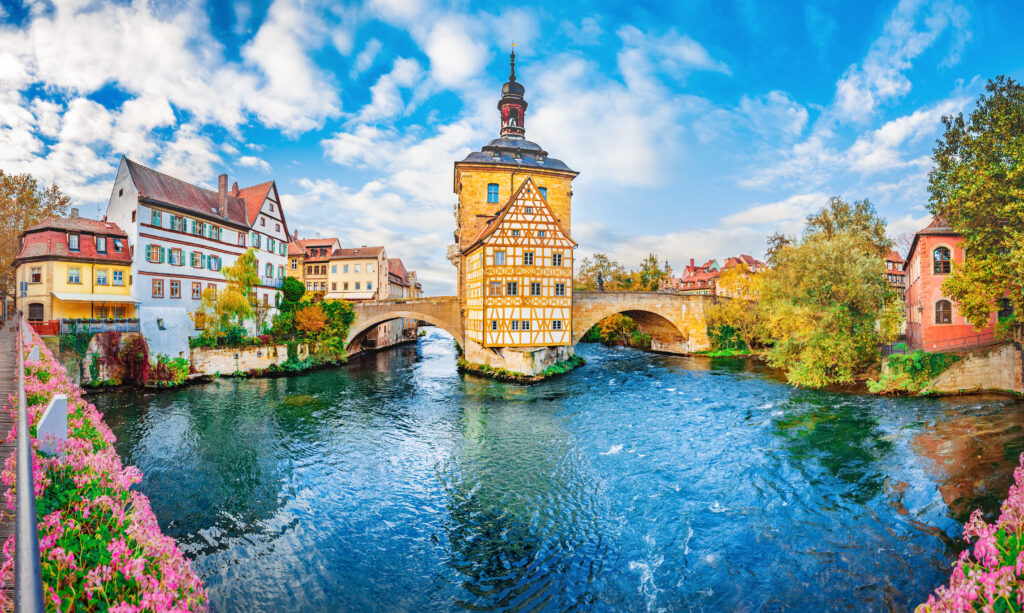
6. The Netherlands: Best for English Speakers and International Professionals
The Netherlands is one of the most English-friendly countries in Europe. Most Dutch people speak excellent English. The international business environment is strong. And Amsterdam, while pricey, is one of Europe’s most livable and well-connected cities.
The Netherlands works well for:
- Entrepreneurs and freelancers (the Dutch-American Friendship Treaty creates a simplified path for Americans to start a business)
- Highly educated graduates looking for work (the Orientation Year visa lets qualifying graduates enter the Netherlands and search for a job without a prior offer)
- Professionals in tech, finance, and international business
- Families who want a safe, progressive country with excellent schools
- Americans who want a strong English-language infrastructure while they get settled
Worth noting: the Netherlands does not allow dual citizenship in most cases, which may affect long-term planning for Americans who want to keep their US passport. Learn more about moving to the Netherlands.
7. Ireland: Best for Americans Who Want an Easy Cultural Transition
Ireland shares a language, a deep cultural history, and strong emotional ties with the United States. For Americans who find the idea of navigating a new language daunting, or who simply want a more familiar landing spot, Ireland offers an accessible and welcoming entry into European life.
Ireland works well for:
- College students and recent graduates (Ireland’s Working Holiday Program requires no job offer and minimal upfront cost)
- Retirees with substantial income (Ireland’s retirement visa requires approximately €50,000 per year)
- Skilled professionals in tech and international business
- Americans with Irish ancestry (citizenship by ancestry is widely available and one of the most popular pathways currently)
- Investors interested in Ireland’s Immigrant Investor Programme
Both the US and Ireland allow dual citizenship, making Ireland one of the cleanest long-term options for Americans who want to keep their passport. Learn more about moving to Ireland.
How to Actually Choose: A Lifestyle-First Framework
If you read through the countries above and still feel unsure, that is completely normal. Here is a simpler way to think about it.
Start with Climate
If you want warmth and sun, look south: Portugal, Spain, Italy. If you prefer a temperate, four-season climate, look north or central: Germany, the Netherlands, Ireland.
Then Think About Language
If French feels natural to you, Belgium and France open up. If you’ve studied Spanish, the obvious choices extend beyond Spain to include overlap with Latin American expat communities in Madrid or Barcelona. If you’re starting from scratch and want the easiest transition, lean toward English-friendly countries; the Netherlands, Ireland, and the Nordic countries all operate heavily in English day-to-day. Language won’t make or break your visa options, but it will make or break how quickly you feel at home.
Now Layer in Your Income Situation
Remote worker with a US salary? Portugal and Spain have dedicated Digital Nomad Visas with clear income thresholds. Retiring on Social Security or a pension? Portugal and Italy both offer passive income pathways with attainable requirements. Career-focused professional with a job offer? Germany and France have strong employment-based pathways. For a full breakdown of low-cost visa options, see our guide to affordable European visas for Americans.
Finally, Think Long Term
Do you eventually want EU citizenship? Do you want to keep your American passport? Are you planning to bring family? Your answers should shape your first visa choice, because the visa you start with determines the path you are on.
This is where getting expert guidance early pays off. The wrong first step can cost you years.

Frequently Asked Questions
Which European country is easiest for Americans to move to?
It depends on your situation. Ireland is often the easiest cultural transition due to the shared language and close historical ties. Portugal and Italy tend to have some of the most accessible income requirements for their visa programs. Germany and the Netherlands offer strong pathways for skilled professionals. The right answer depends on your income, work situation, and long-term goals.
Do I need to speak a foreign language to move to Europe?
No. Many Americans relocate to European countries without any prior language skills, especially in Ireland and the Netherlands, where English is widely spoken. In countries like Portugal, Spain, and Italy, expat communities are large and many services are available in English. Learning the local language over time will help you integrate more fully, but it’s rarely a barrier to getting started.
What is the cheapest European country for Americans to live in?
Portugal, Spain, and Italy consistently offer lower overall costs of living than Western European countries such as France, Germany, and the Netherlands. Within each country, smaller cities and rural areas are significantly more affordable than major urban centers. The right choice depends on the lifestyle you want, alongside the cost savings.
Can Americans move to Europe without a job offer?
Yes. Several European visa categories do not require a job offer. Digital nomad visas in Portugal, Spain, and Croatia allow remote workers to relocate using their existing income. Passive income and retirement visas in Portugal, Italy, Austria, and other countries welcome financially self-sufficient individuals. Germany’s Opportunity Card and the Netherlands’ Orientation Year visa allow qualified graduates to enter and search for work. You can explore the full range of long-stay visa options on our visa overview page.
You Don’t Have to Figure This Out Alone
The hardest part of moving to Europe is usually not the move. It’s the decision. The uncertainty. The feeling that there’s too much to learn before you can even ask the right questions.
Geostrata was built for people at exactly this stage. You do not need a country picked out. You do not need to understand the difference between a digital nomad visa and a passive income visa. You just need a starting point.
If you want to start exploring on your own, our country-specific ebooks walk you through every visa option in plain language, with honest information about what life actually looks like in each place.
If you are ready to talk through your situation with someone who has seen every version of this question, schedule a free consultation with one of our Relocation Advisors. No preparation required. Just show up and tell us where you are.
And for those who want us to manage every detail of the move, explore our White Glove Relocation service.
The life you are picturing is closer than it feels.